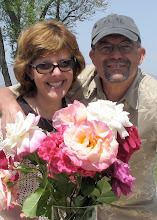
Today we went on the “Hell” Tour in Beppu. The “Hell” Tour is so called because there are nine hot springs in Beppu that consist of boiling mud. I listed the info about the 2300+ hot springs in Beppu yesterday but apparently touring the plain vanilla hot springs is not a big tourist attraction. Of course some of them are located in people’s private homes so it is not as though you could get to them. If you had a hot spring at your house would you invite a slew of tourists in? I am guessing not.
Anyway the “Hell” Tour (or Jigoku Meguri) is a big tourist attraction in Beppu which is otherwise a bit out of the way. The word “jigoku” takes its meaning, “burning hell” from the ancient Buddhist sutras. Writer and Buddhist priest Kon Toukou, winner of the Naoki Award (the what?) in 1957, said, “Human beings need to experience hell in this life at least once, to empty themselves of their superfluous accumulations, to reflect on their past conduct, and to contemplate the path ahead. For this important purpose, I highly recommend a visit to Beppu, to witness the many aspects of hell. Only those who have been through hell and lived to recount the experience, are worthy to be called real human beings.” To which my rude American response is, “Dude, it is just some bubbling, steaming mud. Get real. You want to experience hell? Try 12 hours in an airplane. Imagine not being able to get off for all eternity.” Still the “Hell” Tour was pretty cool. It doesn’t hurt that the jigoku are located in picturesque surroundings (see photos). Beppu itself is a beautiful city along the shoreline surrounded by green, tree covered mountains. The jigoku themselves are located in lovely gardens.
Following the jigoku meguri we took the bullet train to Kyoto. This was coming full circle for Nancy and me as we had previously taken the bullet train from Kyoto to Hakata and now we took the train from Hakata to Kyoto. Gotta say I love the bullet train. Hope I live to see the completion of the one us much maligned California voters approved. Aside from the fact that I would be going to (ugh) LA I would rather do it at 150 miles per hour on a train while working on my laptop and being served snacks by a cute young Japanese woman (well in California she would probably be a cute young Hispanic woman but I am not fussy when it comes to cute young women) rather than behind the wheel of a car.
Point of fact I can’t wait to get behind the wheel of a car again. Or get a decent California Zinfandel (note to California wineries: the French and Australians have cornered the Japanese market, opportunity knocks). Or hear some good old American rock ‘n’ roll. Much as I have enjoyed (and continue to enjoy) this trip I am ready to return home. Rag tag bunch that you may be we miss all of you. See you soon.
Photos: (Copy and paste if link won't work.)
http://www.facebook.com/album.php?aid=23858&id=1680191390&l=4224b1d469
Tuesday, March 30, 2010

Monday, March 29, 2010
Kumamoto Castle
No blog today but here are some photos of Kumamoto Castle. It was used as a setting for the Tom Cruise movie The Last Samurai. Fortunately I am better looking than Tom Cruise so the photos look great. (Delusional in Japan?)
http://www.facebook.com/album.php?aid=23809&id=1680191390&l=19c209b8a6
http://www.facebook.com/album.php?aid=23809&id=1680191390&l=19c209b8a6
Saturday, March 27, 2010
Oita
Yesterday’s visit to Mt. Aso the volcano was pretty much a bust. The entire volcanic peak was enshrouded in fog and completely invisible. First time on the tour that the weather was uncooperative. This morning, however, clear with unlimited visibility so at least we saw the mountain from the hotel. We started the day with an exciting bus trip over a snow covered mountain pass (think Donner Summit with a two lane blacktop) to the next prefecture. Everyone in the bus was nervous and kept questioning why, when the other buses were putting on chains, we just kept passing them. The bus driver spoke no English but eventually we got the message that we were not stopping to put on chains because we did not have any. Fortunately the bus driver was very skilled and we made it without incident.
First stop was the Yufuin Folkcraft Village. Essentially this is a quasi-museum that preserves and features hand crafts from ancient Japan. Paper making, weaving, cloth dying, glass blowing and other crafts were featured along with the requisite shops. Commercialism aside watching actual people do this ancient work was fascinating.
Next stop was the Oita Agricultural Park, a research and educational facility. We were welcomed with another speech. We had lunch there in the cafeteria (another Japanese buffet, if I get a chance I will have to devote one of these posts to the subject of food in Japan). After lunch we had some free time to roam through the facility (including gift shop, camellia sale and camellia bonsai exhibit). After that the group was loaded onto one of those electric trams like you see at amusement parks and trucked around the lake to the camellia garden. There was not enough room on the tram for everyone so Colin (from Australia) and I were left behind. About ten minutes later the female guides found us both and ushered us out to the waiting limousine (I lie; it was a little tiny Nissan, a model not available in the US). Nonetheless Colin and I got to look down our noses at the common folk who had to ride in the open tram (did I mention that it was cold and windy?) when we arrived at the camellia garden.
From the Ag Center we bussed on to the Oita Floriculture Research Institute where we were welcomed with yet another speech. As Oita is near Beppu the Research Institute had a hot springs on the grounds which they used to both heat their offices and laboratories and a glass conservatory. We walked through the conservatory which was like most conservatories (think the one in Golden Gate Park) featuring orchids and other tropical plants. Outside and up the hill was the (we build suspense here) camellia garden. Touring a camellia garden with camellia lovers is an amusing experience (fortunately, since I have had to do it several times on this tour). They can name almost every plant they see, search for the ID if they can’t and get excited if it is a variety unavailable in their home country. Ever read One Flew Over the Cuckoo’s Nest? There is a scene in the novel when the residents of the mental institution take a field trip. At one of the stops their group makes up the vast majority of people present so their perspective on reality becomes the norm. In the usual mix in the world at large camellia lovers might be viewed as eccentric. In the context of this tour I am the eccentric. Obviously this is not a new experience for me.
Since embarking on this tour and meeting Beate (pronounced bee-ah-tuh, from Germany) Nancy’s love of a variety of camellias known as Higos has deepened. Beate gave a presentation on Higos at the congress. Nancy was impressed with both the presentation and the presenter so she has decided to become the California Queen of the Higos (did I mention eccentricity?).
Our hotel that night was in Hiji a town south of Beppu. Like Nagasaki, Fukue and probably many Japanese cities Hiji is built at the foot of the mountains on a strip of flat land that is the shoreline. Consequently we had gorgeous views from our seventh floor room both morning and night. This was also one of the more elegant hotels we stayed in. Although Japanese baths were available there was also a karaoke bar available. Nancy decided that she needed to perform. The bar did not open until nine but Nancy, Juliet (a partying Australian naturally) and I went down just after nine. I went on two conditions: 1) I would not sing and 2) I would drink. Fueled by Asashi Nancy belted out a rendition of “California Dreaming.” The crowd went wild and we quit while we were ahead. I am going to do the same.
Photos: http://www.facebook.com/album.php?aid=23667&id=1680191390&l=4f3959aacb
First stop was the Yufuin Folkcraft Village. Essentially this is a quasi-museum that preserves and features hand crafts from ancient Japan. Paper making, weaving, cloth dying, glass blowing and other crafts were featured along with the requisite shops. Commercialism aside watching actual people do this ancient work was fascinating.
Next stop was the Oita Agricultural Park, a research and educational facility. We were welcomed with another speech. We had lunch there in the cafeteria (another Japanese buffet, if I get a chance I will have to devote one of these posts to the subject of food in Japan). After lunch we had some free time to roam through the facility (including gift shop, camellia sale and camellia bonsai exhibit). After that the group was loaded onto one of those electric trams like you see at amusement parks and trucked around the lake to the camellia garden. There was not enough room on the tram for everyone so Colin (from Australia) and I were left behind. About ten minutes later the female guides found us both and ushered us out to the waiting limousine (I lie; it was a little tiny Nissan, a model not available in the US). Nonetheless Colin and I got to look down our noses at the common folk who had to ride in the open tram (did I mention that it was cold and windy?) when we arrived at the camellia garden.
From the Ag Center we bussed on to the Oita Floriculture Research Institute where we were welcomed with yet another speech. As Oita is near Beppu the Research Institute had a hot springs on the grounds which they used to both heat their offices and laboratories and a glass conservatory. We walked through the conservatory which was like most conservatories (think the one in Golden Gate Park) featuring orchids and other tropical plants. Outside and up the hill was the (we build suspense here) camellia garden. Touring a camellia garden with camellia lovers is an amusing experience (fortunately, since I have had to do it several times on this tour). They can name almost every plant they see, search for the ID if they can’t and get excited if it is a variety unavailable in their home country. Ever read One Flew Over the Cuckoo’s Nest? There is a scene in the novel when the residents of the mental institution take a field trip. At one of the stops their group makes up the vast majority of people present so their perspective on reality becomes the norm. In the usual mix in the world at large camellia lovers might be viewed as eccentric. In the context of this tour I am the eccentric. Obviously this is not a new experience for me.
Since embarking on this tour and meeting Beate (pronounced bee-ah-tuh, from Germany) Nancy’s love of a variety of camellias known as Higos has deepened. Beate gave a presentation on Higos at the congress. Nancy was impressed with both the presentation and the presenter so she has decided to become the California Queen of the Higos (did I mention eccentricity?).
Our hotel that night was in Hiji a town south of Beppu. Like Nagasaki, Fukue and probably many Japanese cities Hiji is built at the foot of the mountains on a strip of flat land that is the shoreline. Consequently we had gorgeous views from our seventh floor room both morning and night. This was also one of the more elegant hotels we stayed in. Although Japanese baths were available there was also a karaoke bar available. Nancy decided that she needed to perform. The bar did not open until nine but Nancy, Juliet (a partying Australian naturally) and I went down just after nine. I went on two conditions: 1) I would not sing and 2) I would drink. Fueled by Asashi Nancy belted out a rendition of “California Dreaming.” The crowd went wild and we quit while we were ahead. I am going to do the same.
Photos: http://www.facebook.com/album.php?aid=23667&id=1680191390&l=4f3959aacb
Thursday, March 25, 2010
Kurume Kapers
So we settled in Kurume for three days. Nancy attended presentations in the morning while I did laundry, got the blog caught up and, on the final day went “parading” in Kurume (if the reference is obscure watch “A Hard Day’s Night” again). The photo album that shares this post’s name includes random shots taken over this three day period as we toured private gardens, a public park and my unguided parading. Officially we visited Kumamoto Castle, Suizenji-koen and various private gardens which, of course, have no name.
Here is what the guide book says about Kumamoto Castle. “Kumamoto Castle is Japan’s third biggest and one of its most romantic looking by night. It was used during the filming of Tom Cruise’s 2003 movie, The Last Samurai.” The day we went was overcast and it had been raining during the night and morning. It did not rain while we were there but the grey, gloomy aspect actually suited the castle I think. You can judge for yourself from the photos.
About Suizenji-koen the guidebook says, “an elaborate garden dating from 1632 . . . containing a series of scenes (including a miniature Mount Fuji).” For both the castle and the garden I will once again defer to the photos. In fact, I will create a separate album for each of them as they were very photogenic. I will do that tomorrow if we have Internet access at the next hotel as it is getting late and I want to get this blog and album done then get to bed.
In Karume there was an opening and a closing banquet but in between we were on our own for dinner for three nights in a row. Some spontaneous law of attraction brought together the Klan Kurume consisting of Nancy, Barbara and I as well as David (from Huntington Gardens) and Frank (from a botanical garden in Virginia the name of which now escapes me, I will correct this error in a later post, I promise Frank). Frank and David were on the pre-tour and we had been hanging out a bit. The Klan Kurume was completed with the addition of Matt and Elizabeth (the Kurume Kids), a young couple from Philadelphia where Matt works at Longwood Gardens. We went in search of first noodle soup, then ramen (a Kurume specialty) and then just very Japanese food.
Both Nancy and I have acquired a new appreciation for Japanese cuisine on this trip although it still has the capacity to draw forth a heartfelt, “Yuck!” on occasion. Frank had lived in Japan some years earlier and still retained a mastery of “restaurant Japanese” which served us well. (Frank also was quite knowledgeable about Japan to the extent that Matt dubbed him Frankapedia.) It was Frank who introduced us to Calpis. Calpis (yes, pronounced just as you would imagine) is a fermented milk drink. When I heard that the dreaded yuck factor seemed to be looming but in fact it tastes wonderful, like a slightly less sweet and slightly less carbonated version of 7-Up. The world is stranger than I had imagined.
We were very successful all three nights. The first night we found an excellent noodle shop in the Kurume train station. The second night Frank had the girl at the hotel reception desk recommend her favorite ramen shop. Hot noodle soup and/or ramen are what Frank termed “Japanese comfort food,” warm, savory, safe. No yuck factor.
The third night we ventured a bit further afield finding a small Japanese restaurant down an alley across from the train station. Emboldened by beer and sake we ordered squid, scallops, gyoza, pizza and (thanks to Matt) raw horse meat. (Matt, I managed to get two paragraphs in before the horse meat got associated with your name.) Matt and I were the only ones who tried it. Didn’t taste bad but has an unpleasant fatty texture.
The closing banquet was an elaborate buffet at a hotel different from the one where the congress was held and where Nancy and I had stayed. Many of the meals we have been served have been buffets. This apparently works best for both the tour company and the touristas. From my point of view it gives me a chance to try a small bite of foods I am unfamiliar with to gauge the yuck factor before a set amount is heaped on my plate.
The final banquet, as delicious and delightful as it was, did feature a couple of off key notes. When the meal began we were all (200 of us if you recall) invited to help ourselves. Plates and cutlery were stacked at both ends of the buffet table and in the middle. No flow was established and mild chaos ensued. At nine, just as the party was getting rolling, closing time was announced and we were requested to leave. Hint to ICS: If you want to attract young people to the camellia world don’t stop the party just when the young folk are getting rolling. The Klan decided that in future the Australians should organize the party since, at the risk of both over generalizing and stereotyping, they seem to be a fun loving group.
The bus leaves early friends so I will quit here. On to Beppu (love that name) tomorrow. Guidebook again, “Beppu boasts 2849 hot springs . . . plus nine jigoku (hells) of bubbling mud and geysers.” Away we go. “The humming of the tires/It sure is pretty/I’m thinking ‘bout the women in Kurume City/Hey! I’m on the road again.” (With apologies to Tom Rush for altering the lyrics but that has been my traveling theme song since I first heard it in the mid-sixties so I feel as though I own it.)
Photos: http://www.facebook.com/album.php?aid=23559&id=1680191390&l=1bef66dece
Here is what the guide book says about Kumamoto Castle. “Kumamoto Castle is Japan’s third biggest and one of its most romantic looking by night. It was used during the filming of Tom Cruise’s 2003 movie, The Last Samurai.” The day we went was overcast and it had been raining during the night and morning. It did not rain while we were there but the grey, gloomy aspect actually suited the castle I think. You can judge for yourself from the photos.
About Suizenji-koen the guidebook says, “an elaborate garden dating from 1632 . . . containing a series of scenes (including a miniature Mount Fuji).” For both the castle and the garden I will once again defer to the photos. In fact, I will create a separate album for each of them as they were very photogenic. I will do that tomorrow if we have Internet access at the next hotel as it is getting late and I want to get this blog and album done then get to bed.
In Karume there was an opening and a closing banquet but in between we were on our own for dinner for three nights in a row. Some spontaneous law of attraction brought together the Klan Kurume consisting of Nancy, Barbara and I as well as David (from Huntington Gardens) and Frank (from a botanical garden in Virginia the name of which now escapes me, I will correct this error in a later post, I promise Frank). Frank and David were on the pre-tour and we had been hanging out a bit. The Klan Kurume was completed with the addition of Matt and Elizabeth (the Kurume Kids), a young couple from Philadelphia where Matt works at Longwood Gardens. We went in search of first noodle soup, then ramen (a Kurume specialty) and then just very Japanese food.
Both Nancy and I have acquired a new appreciation for Japanese cuisine on this trip although it still has the capacity to draw forth a heartfelt, “Yuck!” on occasion. Frank had lived in Japan some years earlier and still retained a mastery of “restaurant Japanese” which served us well. (Frank also was quite knowledgeable about Japan to the extent that Matt dubbed him Frankapedia.) It was Frank who introduced us to Calpis. Calpis (yes, pronounced just as you would imagine) is a fermented milk drink. When I heard that the dreaded yuck factor seemed to be looming but in fact it tastes wonderful, like a slightly less sweet and slightly less carbonated version of 7-Up. The world is stranger than I had imagined.
We were very successful all three nights. The first night we found an excellent noodle shop in the Kurume train station. The second night Frank had the girl at the hotel reception desk recommend her favorite ramen shop. Hot noodle soup and/or ramen are what Frank termed “Japanese comfort food,” warm, savory, safe. No yuck factor.
The third night we ventured a bit further afield finding a small Japanese restaurant down an alley across from the train station. Emboldened by beer and sake we ordered squid, scallops, gyoza, pizza and (thanks to Matt) raw horse meat. (Matt, I managed to get two paragraphs in before the horse meat got associated with your name.) Matt and I were the only ones who tried it. Didn’t taste bad but has an unpleasant fatty texture.
The closing banquet was an elaborate buffet at a hotel different from the one where the congress was held and where Nancy and I had stayed. Many of the meals we have been served have been buffets. This apparently works best for both the tour company and the touristas. From my point of view it gives me a chance to try a small bite of foods I am unfamiliar with to gauge the yuck factor before a set amount is heaped on my plate.
The final banquet, as delicious and delightful as it was, did feature a couple of off key notes. When the meal began we were all (200 of us if you recall) invited to help ourselves. Plates and cutlery were stacked at both ends of the buffet table and in the middle. No flow was established and mild chaos ensued. At nine, just as the party was getting rolling, closing time was announced and we were requested to leave. Hint to ICS: If you want to attract young people to the camellia world don’t stop the party just when the young folk are getting rolling. The Klan decided that in future the Australians should organize the party since, at the risk of both over generalizing and stereotyping, they seem to be a fun loving group.
The bus leaves early friends so I will quit here. On to Beppu (love that name) tomorrow. Guidebook again, “Beppu boasts 2849 hot springs . . . plus nine jigoku (hells) of bubbling mud and geysers.” Away we go. “The humming of the tires/It sure is pretty/I’m thinking ‘bout the women in Kurume City/Hey! I’m on the road again.” (With apologies to Tom Rush for altering the lyrics but that has been my traveling theme song since I first heard it in the mid-sixties so I feel as though I own it.)
Photos: http://www.facebook.com/album.php?aid=23559&id=1680191390&l=1bef66dece
Tuesday, March 23, 2010
Ishibashi Cultural Center
Our first full day in Kurume the tour took us to the Ishibashi Cultural Center. Another highlight; what an amazing place! The Center was donated to the city of Karume in 1956 by a native son, Shojiro Ishibashi, the founder of the Bridgestone Corporation. (A parenthetical aside. Bridgestone is well known to Americans for Bridgestone tires. Have you seen “Lost in Translation” where Bill Murray plays an American celebrity who comes to Japan to do an advertisement for the Japanese market? Leonardo Di Caprio’s face is everywhere we have been in Japan pushing Bridgestone tires.) You can check out the Center’s website and brush up on your Japanese at www.ishibashi-bunka.jp. The center includes an art museum, music auditorium, culture hall, library and other facilities. The grounds encompass a swan pond, a rakusui pond and a lotus pond. There is a cherry lane, a rose garden, an iris garden and, of course, a camellia garden.
We had the great good fortune of being there on a day when the sun was shining brightly and the temperature was in the low 60’s so we could wander around freely in comfort. In a small area near the library there was a pavilion of merchants demonstrating their wares. One booth featured 3-D television. I had to stand behind the last row of seats to make the 3-D glasses work over my prescription lenses so I could both see the screen and get the effect but it was very cool. I stood through the whole demo video, about 10 minutes. This was also where I did some sake tasting and bought the non-alcoholic rice drink mentioned in a previous post. The high end sake was also excellent but I decided to pass on that for the time being.
The outdoor stage featured a constant stream of performers although the only ones that presented a photo op that I saw were the young dancers who are featured in one shot included in the accompanying photo album. The art museum was a revelation to me as I was totally unfamiliar with Japanese art other than the well known woodblock prints of Hokkusai and others working in the past. The museum had a great deal of contemporary art (by which I mean 20th Century) that I was completely unfamiliar with. A wide range of styles and subject matter were represented and some of the artists were outstanding. The most dramatic painting was one entitled “Dying Soldiers” which I photographed. Hopefully you will be able to discern the details when you view the photo in the accompanying album.
On display expressly for the camellia festival in one large room were some incredible ancient bonsai trees and camellias as well as a collection of camellias not commonly found in the USA including several varieties with yellow flowers from Vietnam and China.
Photos: http://www.facebook.com/album.php?aid=23437&id=1680191390&l=7881f66916
Please note. If you read the previous post but wondered where the photos were I forgot to add the URL. That mistake is now fixed. Please go back and enjoy the photos.
We had the great good fortune of being there on a day when the sun was shining brightly and the temperature was in the low 60’s so we could wander around freely in comfort. In a small area near the library there was a pavilion of merchants demonstrating their wares. One booth featured 3-D television. I had to stand behind the last row of seats to make the 3-D glasses work over my prescription lenses so I could both see the screen and get the effect but it was very cool. I stood through the whole demo video, about 10 minutes. This was also where I did some sake tasting and bought the non-alcoholic rice drink mentioned in a previous post. The high end sake was also excellent but I decided to pass on that for the time being.
The outdoor stage featured a constant stream of performers although the only ones that presented a photo op that I saw were the young dancers who are featured in one shot included in the accompanying photo album. The art museum was a revelation to me as I was totally unfamiliar with Japanese art other than the well known woodblock prints of Hokkusai and others working in the past. The museum had a great deal of contemporary art (by which I mean 20th Century) that I was completely unfamiliar with. A wide range of styles and subject matter were represented and some of the artists were outstanding. The most dramatic painting was one entitled “Dying Soldiers” which I photographed. Hopefully you will be able to discern the details when you view the photo in the accompanying album.
On display expressly for the camellia festival in one large room were some incredible ancient bonsai trees and camellias as well as a collection of camellias not commonly found in the USA including several varieties with yellow flowers from Vietnam and China.
Photos: http://www.facebook.com/album.php?aid=23437&id=1680191390&l=7881f66916
Please note. If you read the previous post but wondered where the photos were I forgot to add the URL. That mistake is now fixed. Please go back and enjoy the photos.
Monday, March 22, 2010
Dali-ng at Genkai
The visit to the Genkai Energy Park was and will undoubtedly continue to be the strangest day of the tour. Genkai Energy Park is the euphemistic name for a large nuclear reactor located on the bay in Saga Prefecture (prefectures in Japan are analogous to a state or county in the USA). The full official title is the Genkai Nuclear Power Station of Kyushu Electric Power Company, Inc. It is also the home of a famous camellia garden and several ancient camellia trees the oldest of which is estimated to be 450 years old, making your faithful correspondent seem young by comparison.
If this has not become clear from reading between the lines camellias are a big, big deal in Japan, much more so than in the States and way beyond the impact of this relatively small (200+) congress. Consequently preserving the ancient camellia trees and adding a garden was a PR master stroke. Like most Americans I have decidedly mixed emotions about nuclear power, lately I have been acquiring new information and rethinking my position but it makes my head hurt so I will not impose that pain on you. I have no way of actually knowing what the general Japanese attitude towards nuclear power is but I can tell from visiting the Genkai plant that there is money in it. I would guess that the Japanese public has reservations akin to those found in the USA and the Kyushu Power Company (hey, I’m a government bureaucrat, let’s call them the KPC) has spared no expense in their public relations campaign to endear themselves to the community. According to the KPC brochure radiation in the vicinity of the plant is kept to .001 millisverts (?). Waste is compacted, sealed in drums, stored mid-term at the plant and long term at the “Low-Level Radioactive Waste Disposal Center at Rokkasho-mura in Aomori Prefecture.” This information was confirmed by our English speaking guide (we had a Japanese speaker as well). I could trust the English speaking guide implicitly as his name was Mr. Russell and he was from Portland, Oregon.
The grounds of the plant are immaculate; the ancient camellias were preserved and given a featured role in the landscape. A camellia garden was added. Inside the plant there is a fancy high tech auditorium where cute little cartoon characters give you a very sanitary education regarding your friend nuclear power. There is also a small museum featuring artifacts from Japanese history. Again, rather than bore you with inadequate description I will refer you to the photos in the matching album.
For our visit we were given the royal treatment. The banners here welcomed the “2010 Camellia Summit.” Our status elevated from the lowly level of “Congress.” A subtle form of flattery perhaps? We were treated to a tour of the plant, a gourmet buffet lunch, taiko drummers (professionals this time), traditional dancers, a tea ceremony and, of course, a tour of the camellia gardens. So beautiful is the conservatory where the lunch was held that KPC actually rents it out for weddings. Now that destination weddings have become a fad perhaps some Americans will choose to get married at the Genkai Energy Park. What did Mickey sing to Sylvia? Love is strange? Love is not alone in that.
Nancy was ecstatic over the ancient camellias and the traditional dance. She chatted with the dancing sensei; a woman in her 70’s who is clearly a master of the art. The two women bonded quickly and the sensei informed Nancy that we would see her and the troupe again at the closing banquet in Karume. All in all it was another great day spiced nicely with just a soupcon of the surreal.
Photos: http://www.facebook.com/album.php?aid=23407&id=1680191390&l=3a3e0d13fc
Matsura M'dear?
Whew! After constantly being on the move we are finally getting a chance to catch our breath. We have settled in our hotel in Karume and the 2010 International Camellia Congress is underway. Nancy is attending the morning talks and I am in our room drinking the non-alcoholic rice drink which I scored yesterday at the sake tasting booth (details later) and trying to organize my thoughts (what a concept!) to get the old blog in order and up-to-date.
Today’s subject will be our visit to the town of Matsura (has a famous camellia forest, I know you are shocked) and the Kyushu Ceramic Factory (perhaps not the appropriate word) and Museum. The “factory” is either the only place or one of the few (lost in translation) places in Japan that still makes ceramic pottery by hand and then fires it in a large kiln heated by burning pine wood. The process was fascinating and the results stunning but the photos in the matching album will probably give you a better sense of it then any thousand words I could type. The Museum has both ancient and contemporary handmade ceramics on permanent display and, during our visit, was also displaying the Shibata Collection, Arita porcelains from the Edo period (1603 -1867) donated by Mr. and Mrs. Shibata.
The funniest bit at the ceramic factory occurred when our guide was explaining to us about the hand painting of the designs on the porcelain prior to firing. The person doing the painting at the station we were stopped at was female. Our guide told us that it “had to be virgin.” One of our group, a boisterous and very funny Englishman began teasing the women that they would not qualify to work as painters at the Kyushu plant. Later, after we were back on the bus, he stood up and apologized to the assembled passengers. Turns out it is the brushes used in painting that must be virgin, i.e. not previously used on another piece, not the women who do the painting.
We then took a short bus ride to the town of Matsura, home to a famous camellia forest. The town welcomed us with open arms. Once again we were treated to speeches from dignitaries such as the mayor of Matsura. There was also taiko drumming, a display of bonsai camellias and art work by the local school children. Warm, friendly and wonderful but Goto is still number one.
At the camellia forest they apologized for the fact that the weather has been unseasonably warm prior to our arrival so the camellias had bloomed early and were past their peak. The camellia enthusiasts participated in planting some camellia bushes. We non-enthusiasts urged them on explaining how pleasant it was to watch them work. They were not as appreciative as one might have expected.
Despite the lack of blooms the forest is in a gorgeous location right on the coast so the hike, invigorating after some time on the bus, led us through the forest with occasional scenic views and then down to the beautiful beach.
The next couple of hours were a bit more grueling. As the forest hike was mildly rugged several members of the tour had opted to skip it and go directly on to that night’s hotel. This involved a bit of shifting from bus to bus. The hike bus was a bit overloaded as a consequence. The bus is equipped with fold down seats that drop into the aisle for just such situations but they are to comfort as skunk is to aroma. By the time we got to the hotel certain individuals who shall remain nameless felt as though they had been thoroughly beaten by Yakuza and had been magically transformed into Mr. Crankypants.
The hotel that we had been brought to was called the New Amsterdam and is set, along with about ten other hotels, in a Japanese theme park called Huis Ten Bosch. The entire place is designed to mimic a village in Holland (go figure) complete with thousands of blooming tulips and a huge rose garden (guess who loved that) although the roses were not yet in bloom. There were several restaurants scattered throughout the grounds but Mr. Crankypants insisted on going to the closest one which turned out to be an outrageously expensive gourmet buffet. Still, Mr. Crankypants was able to obtain a fairly decent French Pinot Noir and apply the analgesic effects of alcohol to his battered body. That accomplished a hardy meal featuring the famous Kobe beef and something the non-English speaking chef referred to as “super pork” was enjoyed by our threesome and our newly acquired friends Kathy and Roger from Oregon. When the meal was complete even Mrs. Not Quite So Cranky had to acknowledge that it had been an excellent meal.
The New Amsterdam Hotel is, and will probably remain, the swankiest hotel we have stayed in on the tour. The room was huge and included a raised platform with a table and specially designed chairs so you could sit on the floor Japanese style and still enjoy back support (see photo). Swanky or no there was no Internet access. Zip, zero, none. This is why this entry is being completed and uploaded four days after the fact.
Tomorrow on to Genkai Energy Park.
Photos: http://www.facebook.com/album.php?aid=23360&id=1680191390&l=de8aee06f2
Today’s subject will be our visit to the town of Matsura (has a famous camellia forest, I know you are shocked) and the Kyushu Ceramic Factory (perhaps not the appropriate word) and Museum. The “factory” is either the only place or one of the few (lost in translation) places in Japan that still makes ceramic pottery by hand and then fires it in a large kiln heated by burning pine wood. The process was fascinating and the results stunning but the photos in the matching album will probably give you a better sense of it then any thousand words I could type. The Museum has both ancient and contemporary handmade ceramics on permanent display and, during our visit, was also displaying the Shibata Collection, Arita porcelains from the Edo period (1603 -1867) donated by Mr. and Mrs. Shibata.
The funniest bit at the ceramic factory occurred when our guide was explaining to us about the hand painting of the designs on the porcelain prior to firing. The person doing the painting at the station we were stopped at was female. Our guide told us that it “had to be virgin.” One of our group, a boisterous and very funny Englishman began teasing the women that they would not qualify to work as painters at the Kyushu plant. Later, after we were back on the bus, he stood up and apologized to the assembled passengers. Turns out it is the brushes used in painting that must be virgin, i.e. not previously used on another piece, not the women who do the painting.
We then took a short bus ride to the town of Matsura, home to a famous camellia forest. The town welcomed us with open arms. Once again we were treated to speeches from dignitaries such as the mayor of Matsura. There was also taiko drumming, a display of bonsai camellias and art work by the local school children. Warm, friendly and wonderful but Goto is still number one.
At the camellia forest they apologized for the fact that the weather has been unseasonably warm prior to our arrival so the camellias had bloomed early and were past their peak. The camellia enthusiasts participated in planting some camellia bushes. We non-enthusiasts urged them on explaining how pleasant it was to watch them work. They were not as appreciative as one might have expected.
Despite the lack of blooms the forest is in a gorgeous location right on the coast so the hike, invigorating after some time on the bus, led us through the forest with occasional scenic views and then down to the beautiful beach.
The next couple of hours were a bit more grueling. As the forest hike was mildly rugged several members of the tour had opted to skip it and go directly on to that night’s hotel. This involved a bit of shifting from bus to bus. The hike bus was a bit overloaded as a consequence. The bus is equipped with fold down seats that drop into the aisle for just such situations but they are to comfort as skunk is to aroma. By the time we got to the hotel certain individuals who shall remain nameless felt as though they had been thoroughly beaten by Yakuza and had been magically transformed into Mr. Crankypants.
The hotel that we had been brought to was called the New Amsterdam and is set, along with about ten other hotels, in a Japanese theme park called Huis Ten Bosch. The entire place is designed to mimic a village in Holland (go figure) complete with thousands of blooming tulips and a huge rose garden (guess who loved that) although the roses were not yet in bloom. There were several restaurants scattered throughout the grounds but Mr. Crankypants insisted on going to the closest one which turned out to be an outrageously expensive gourmet buffet. Still, Mr. Crankypants was able to obtain a fairly decent French Pinot Noir and apply the analgesic effects of alcohol to his battered body. That accomplished a hardy meal featuring the famous Kobe beef and something the non-English speaking chef referred to as “super pork” was enjoyed by our threesome and our newly acquired friends Kathy and Roger from Oregon. When the meal was complete even Mrs. Not Quite So Cranky had to acknowledge that it had been an excellent meal.
The New Amsterdam Hotel is, and will probably remain, the swankiest hotel we have stayed in on the tour. The room was huge and included a raised platform with a table and specially designed chairs so you could sit on the floor Japanese style and still enjoy back support (see photo). Swanky or no there was no Internet access. Zip, zero, none. This is why this entry is being completed and uploaded four days after the fact.
Tomorrow on to Genkai Energy Park.
Photos: http://www.facebook.com/album.php?aid=23360&id=1680191390&l=de8aee06f2
Subscribe to:
Posts (Atom)